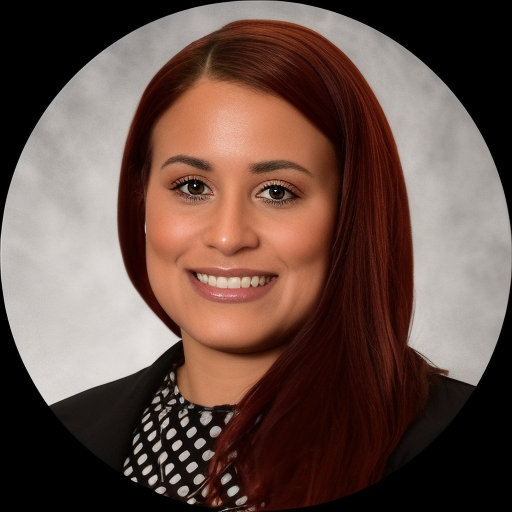
Shalin Candelaria, LMHC
Collaborative care for stress and life changes
Opens BetterHelp in a new tab, where you can review online therapy options.
At a glance
- Listed location
- Florida
- Experience
- 5+ years
- Credentials
- LMHC
- Languages
- English, Spanish
- License (Florida)
- LMHC · No. MH25496
- NPI
- 1386369643
Copied as listed by the therapist. You can check a license with the state board and an NPI with the national registry.
- LMHC in Florida
- Spanish and English
- Trauma informed approach
About Shalin
Shalin uses a collaborative, client-centered style that puts the person’s goals first. She adapts sessions to what each person needs, combining practical skills with space to process emotions. Over five years of practice she has worked with people coping with trauma, relationship struggles, self-esteem concerns, and complex health or caregiving pressures.
Her work often includes cognitive behavioral techniques to spot and change unhelpful thinking. She also uses emotion-focused methods and EMDR when trauma processing is appropriate. Those approaches are woven into a strengths-based way of working so clients build concrete tools they can use outside sessions.
Shalin speaks English and Spanish and practices in Florida. She describes therapy as a paced, cooperative process where clients set the direction and try strategies between sessions. Practical coping, clearer communication, and steadier emotional regulation are common focuses.
People who meet with her can expect clear explanations of methods, an emphasis on usable skills, and time to talk through difficult experiences. To start, clients follow the platform’s sign-up steps and schedule according to the therapist’s available times.
Areas of expertise
Additional focus areas
Therapeutic approaches
Experience
5+ years
Credentials
Florida
Languages
English, Spanish
How therapeutic approaches work in online care
Client-Centered Therapy is built around listening and responding to what each person needs. The therapist follows the client’s lead, offers empathy, and helps clarify goals to make sessions feel focused and relevant.Cognitive Behavioral Therapy (CBT) teaches practical skills to change unhelpful thoughts and behaviors. It often uses short exercises and homework to build new habits for anxiety, depression, and stress management.
Emotionally-Focused Therapy (EFT) helps people identify and shift the emotions that drive their actions. It is useful for processing attachment-related concerns and improving how someone relates to others and to themselves.
Choosing an approach is a shared process. The therapist will discuss different methods and recommend options based on a person’s goals, preferences, and what feels most useful in early sessions. Decisions are revisited as needs change so the plan stays practical and relevant.
If you want online work, confirm the session formats available before booking. Online therapy can make scheduling easier and fit into a busy day. It can also allow a shorter check-in when time is tight, reduce travel, and let people meet from different locations without changing their daily routine. Licensed professionals can explain which approach and session rhythm will best support your goals.
Frequently asked questions
What kinds of concerns does this therapist address?
She helps people dealing with stress, anxiety, depression, trauma and abuse, self-esteem, and coping with life changes, along with many related issues such as caregiver stress, chronic illness, and aging and geriatric issues.
How would you describe the therapy style here?
The approach is collaborative and client-centered, mixing practical skills and emotional work. Techniques like cognitive behavioral work and emotion-focused strategies are used to meet individual needs.
What experience does the therapist have?
The therapist has five years of clinical experience working with people facing anxiety, trauma, relationship concerns, and life transitions.
What are the therapist's credentials and location?
She is an LMHC practicing in Florida; the listing shows the credential as LMHC.
Which languages are supported for sessions?
Sessions are offered in English and Spanish.
Are international clients accepted?
International clients are not currently accepted.
How are costs and billing handled?
Cost varies with location and therapist availability; sessions use a subscription that can be canceled at any time.
What are the steps to begin working with this therapist?
Use the Start Therapy button, complete the short matching questionnaire, and then schedule a session according to the therapist's availability.